
What Is Software Engineering? A Beginner Friendly Guide
“Jesica do you have some awareness of what Software Engineering is? It is available to use for times like this. We can’t handle all these customers with manual work. Let’s install software. ” I asked my sister. I was already exhausted by doing so much work with manual ledgering procedures.
“Okay” Sammy said. So, before she changed her mind, I immediately met a Software Engineer.
“Didn’t you buy the software? After a week she asked me.
“No Mr.Alvin asked me a lot of questions about business. He said no readymade software and our software system takes at least around one month to build up.”
“Ms. Clare, your system is unique and a bit complex. It’s not something you can simply buy off the shelf. It needs to be built. That’s where software engineering comes in. Our team will design and develop a system tailored to your needs. I think your software Engineering knowledge is not enough to understand the situation. Shall I tell you what the Software Engineering is?”
“I love it. Tell me more about Software Engineering. I am total beginner” I said. Then he started to explain
You may be a student, businessman like the above sisters, or any other professional. Or sometimes you are also a total beginner in software engineering. But believe me, some awareness about software engineering will never fail you in life. So, let’s turn to the software engineering world and identify what software engineering is. In this guide, I am going to tell you about all the basics of software engineering.
What Is Software Engineering? (Beginner Guide)
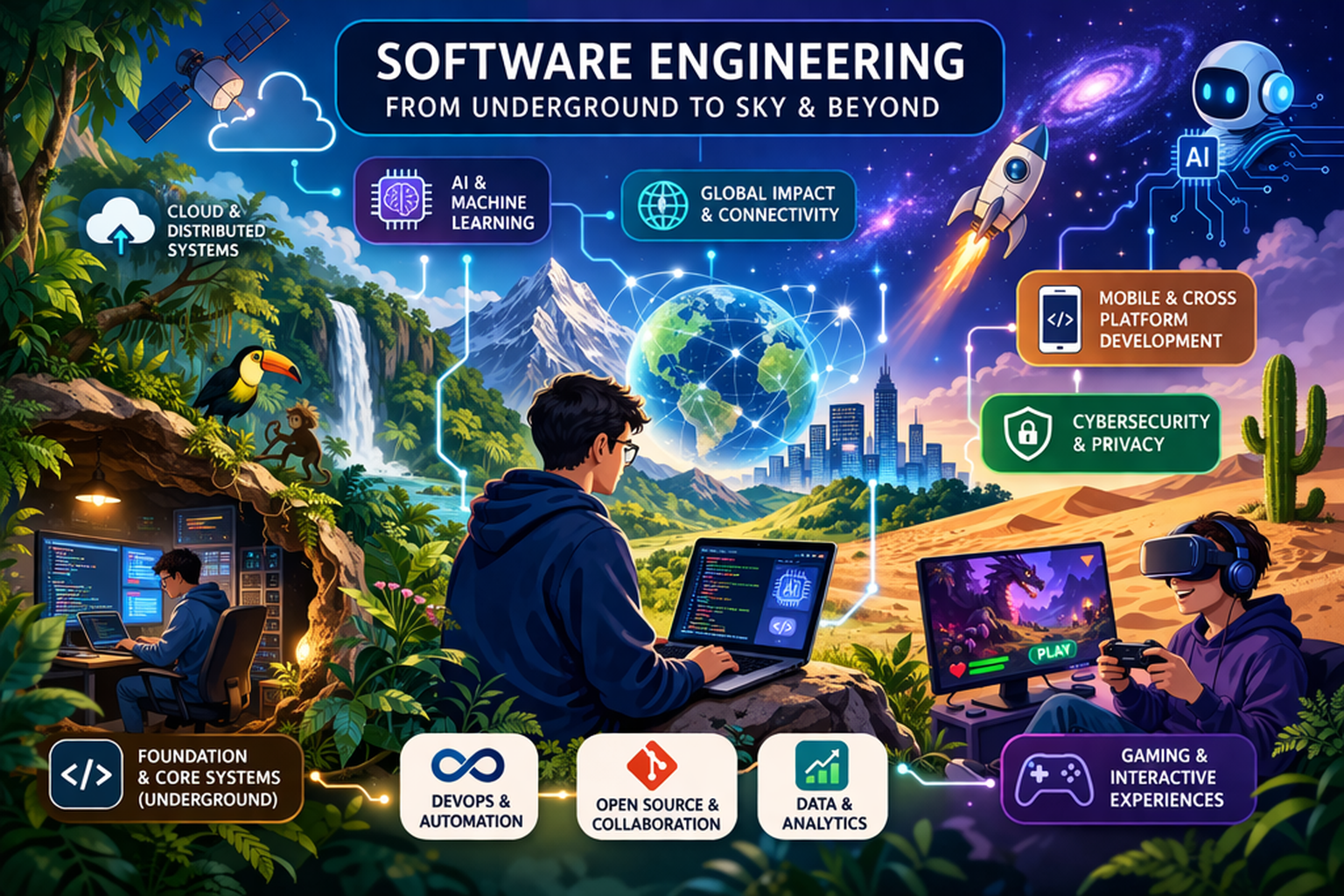
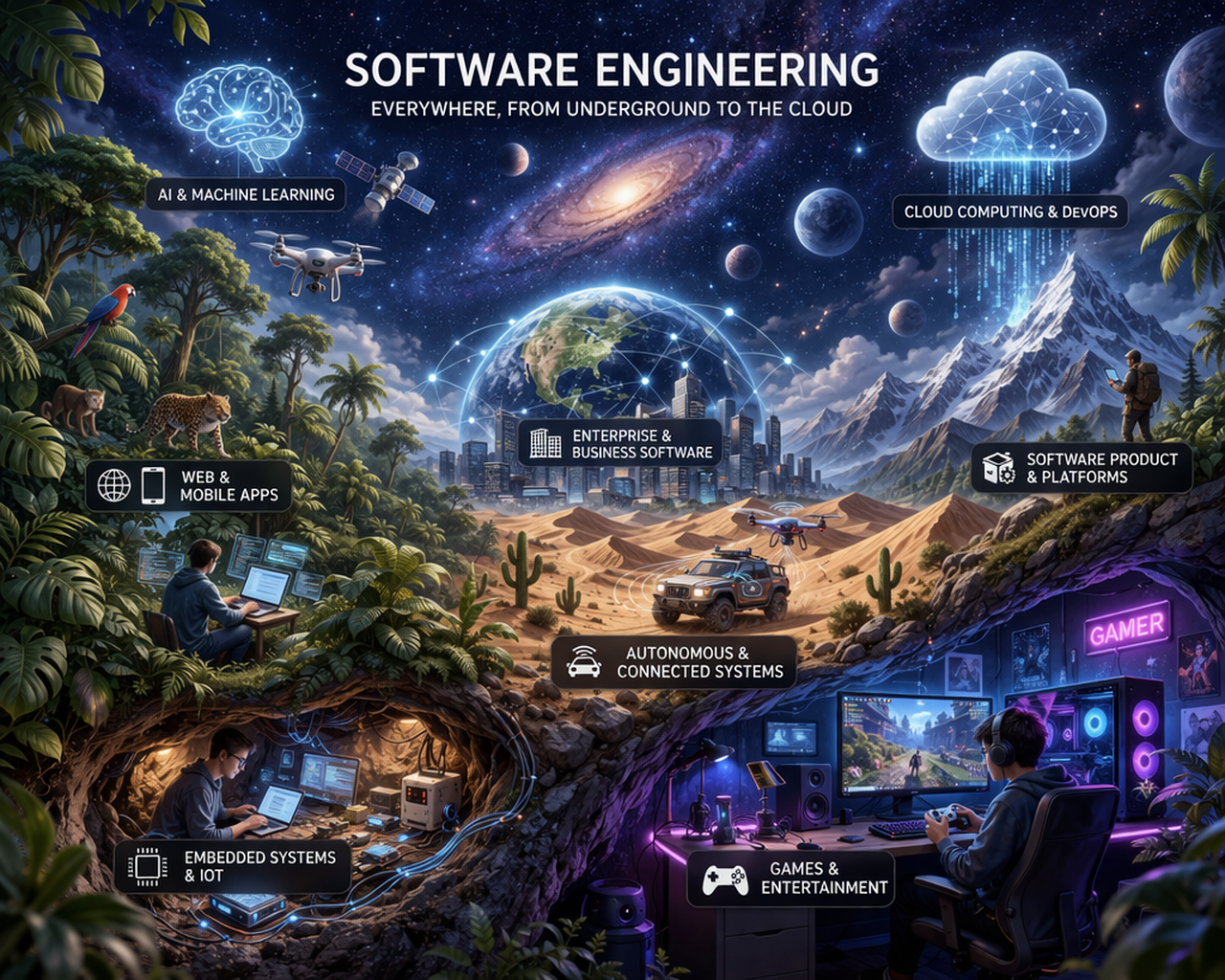
Now we are in a modern digital world where we use software applications in every nook and corner. From desktop application to web application, from web application to your smart phone application,from smart phone application to Space these software plays a vital role. So little by little software has become one of the most essential tools for our day to day life. In other words we can say software is the backbone of modern technology. But to create reliable, efficient, and secure software we require more than just writing code. This is the place where software engineering comes into stage.
First you must understand that Software engineering is not only programming. But programming is part of Software engineering. Software engineering has some structured approach to
- Designing
- Building
- Testing.
- Maintaining
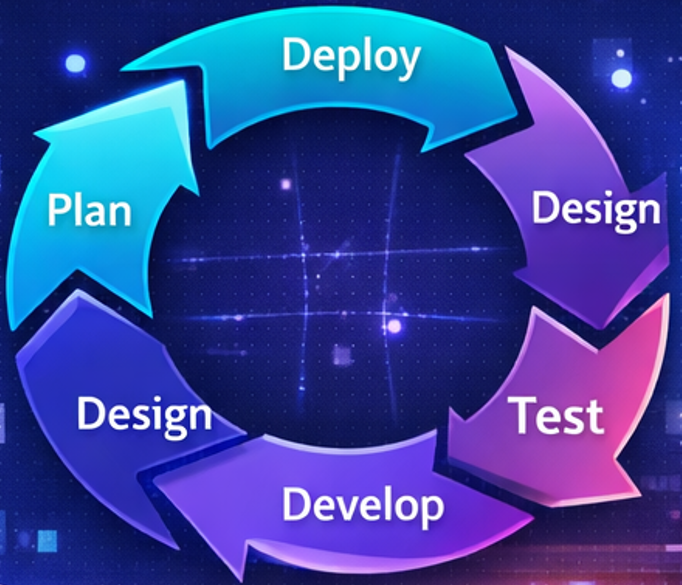
software systems. It is built to ensure that the software we developed is in a systematic way. By that we can find out our software is in a state of reliable, scalable, and easy to maintain. In this article, we will learn all the details of what software engineering is, why it is important, and how it creates the technology we use every day.
Now it’s time to learn what exactly is this Software Engineering.
Table of Contents
1 What is Software Engineering
2 History of Software Engineering
3 Why Software Engineering Is Important
4 Difference Between Programming and Software Engineering
5 Key Principles of Software Engineering
6 Software Development Life Cycle (SDLC)
7 Software Development Methodologies
8 Roles in a Software Engineering Team
9 Programming Languages Used in Software Engineering
10 Tools and Technologies Used by Software Engineers
11 Types of Software Developed by Software Engineers
12 Skills Required to Become a Software Engineer
13 Challenges in Software Engineering
14 Career Opportunities in Software Engineering
15 The Future of Software Engineering
16 Tips For Success
17 Common mistakes in Software Engineering
18 FAQ
19 Conclusion
>> READ THIS ARTICLE SINHALA
1. What is Software Engineering
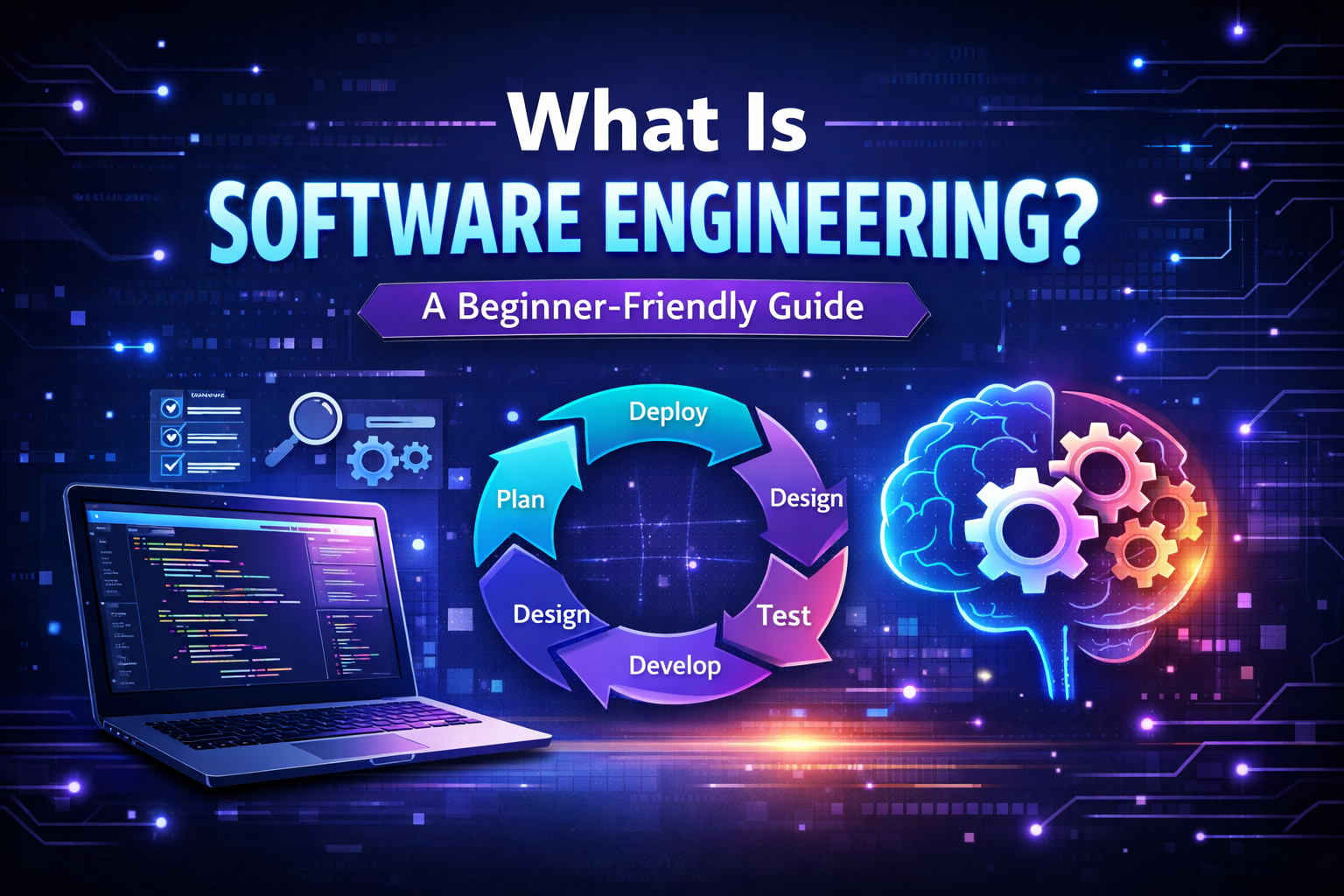
As you know Software engineering is applying engineering principles and systematic methods to software development. But remember software engineering is not equal to programming. Basically the software developed under Software engineering involves five steps.
These steps are :
- Planning
- Designing
- Coding
- Testing.
- Maintaining software applications.
Software engineering focuses on managing complex software systems efficiently. In here developers try to ensure that software is built using best practices, proper documentation, and quality assurance processes.
Creating an Application using software engineering goal is to create software that is reliable, efficient, maintainable, and capable of meeting user requirements.
2.History of Software Engineering
As a beginner, it’s important to know about the history of the thing we are going to learn. In the late 1960s there was a period when many large software projects failed. Engineers named this period as “software crisis.” and try to find out the cause of the failure.
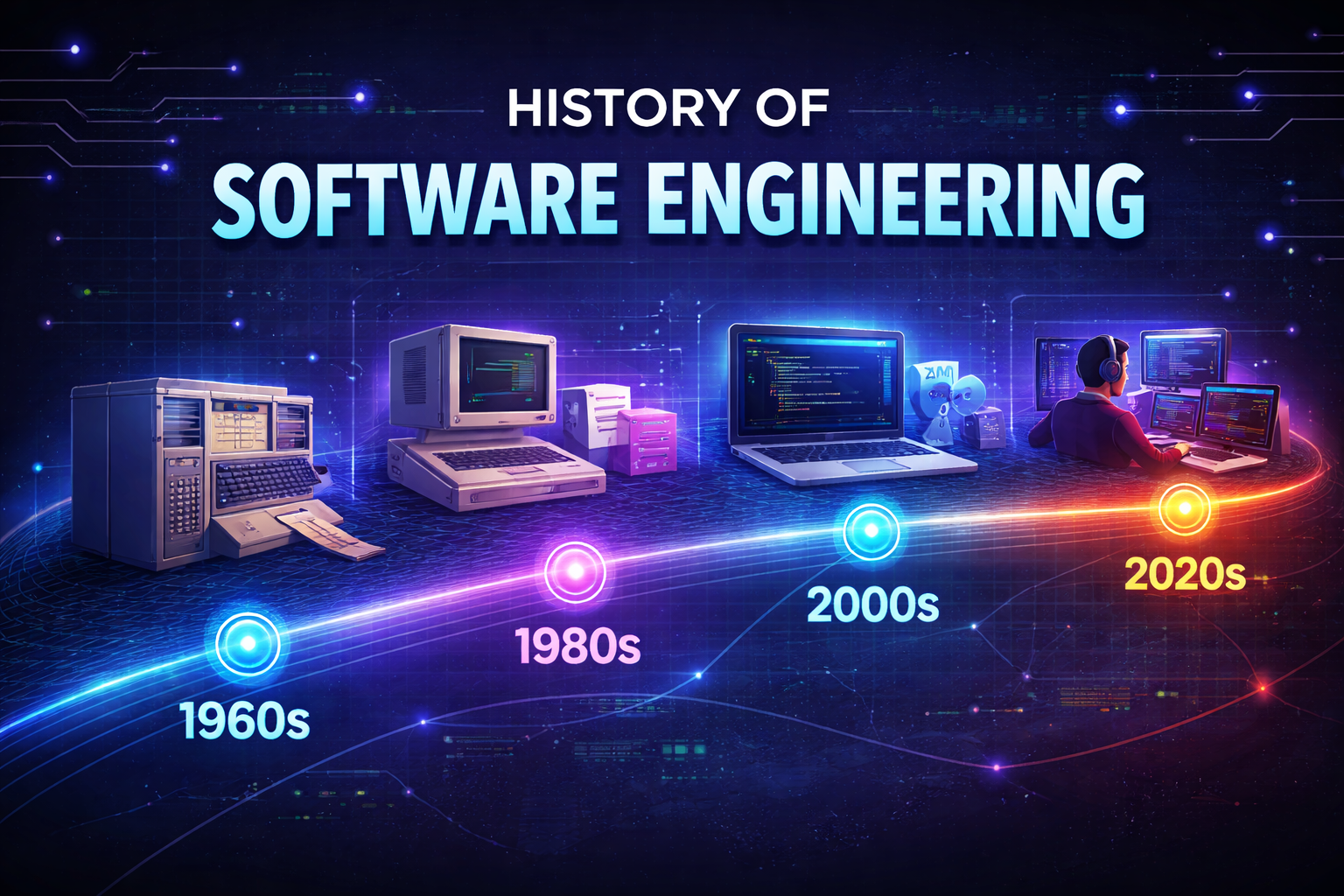
Then they learn these projects have failed due to :
- Poor planning,
- Unclear requirements,
- increasing system complexity.
At that time engineers discussed applying engineering principles and systematic methods together and developing software applications under the concept of Software Engineering. This combination led to the development of structured programming, standardized development processes, and better project management practices.
Since then, software engineering has evolved rapidly. Today software engineering includes modern methodologies. such as Agile development, DevOps, and cloud-based software development.
>> READ THIS ARTICLE SINHALA
3. Why Software Engineering Is Important
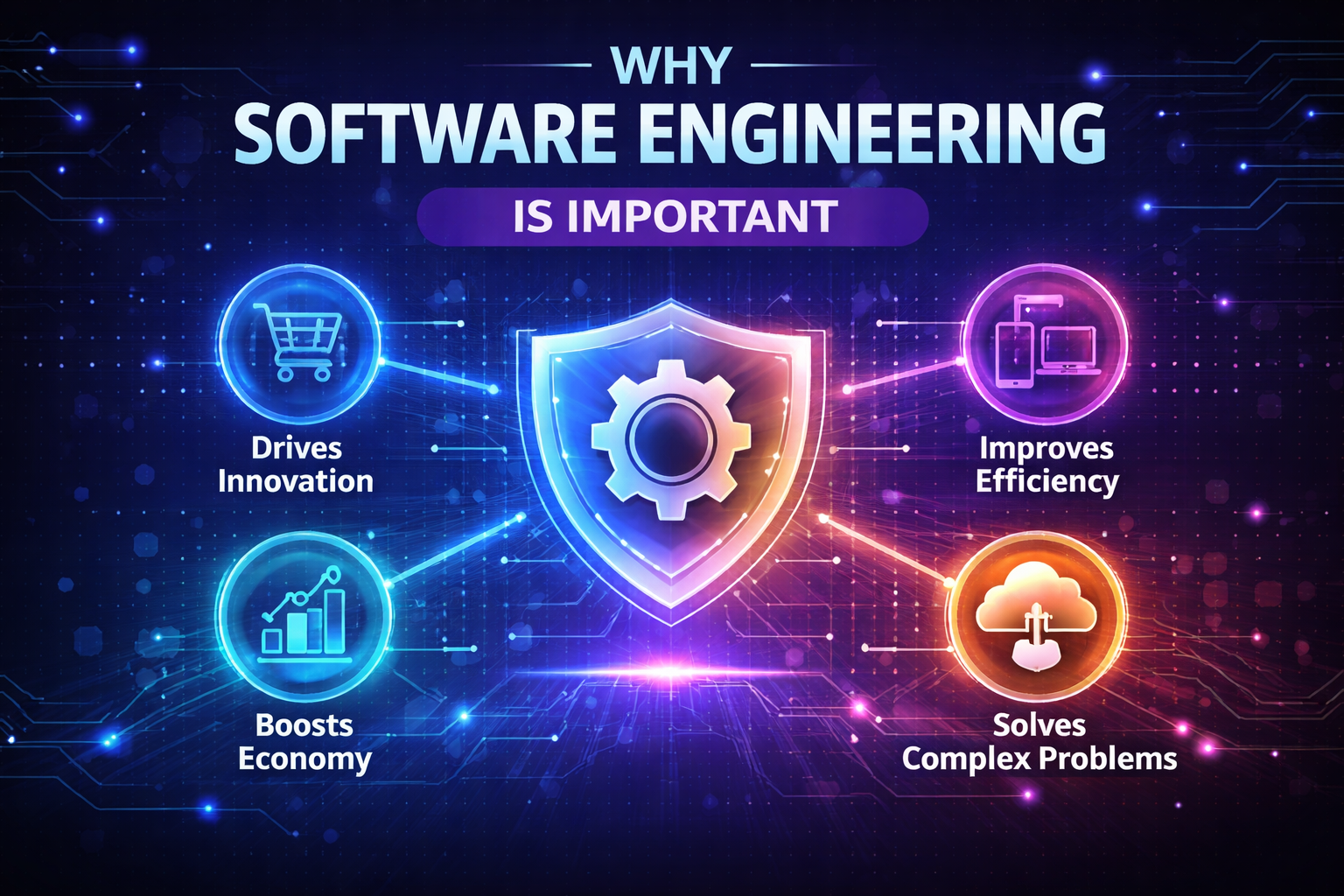
Do you know why this software engineering is so important to the modern world? You know that these days most software systems are very complex. Without software engineering, developing software applications would be very chaotic and inefficient.
Let’s discuss important reasons why software engineering is so important. :
- Can ensure software reliability and quality,
- Can effectively manage complex systems.
- Can reduce software development time and cost.
- Can enhance collaboration between software developers.
- Can efficiently maintain software applications.
I think now you are aware that by following engineering principles, developers can develop the most complex software systems easily. They can focus on user needs and maintain high quality standards.
4.Difference Between Programming and Software Engineering
Most people believe that software engineering and programming are the same. But you must know that this is not true. Those are two different concepts. So let’s focus on what the differences are.
The main deal of programming is coding and developing programs to solve some specific problems.
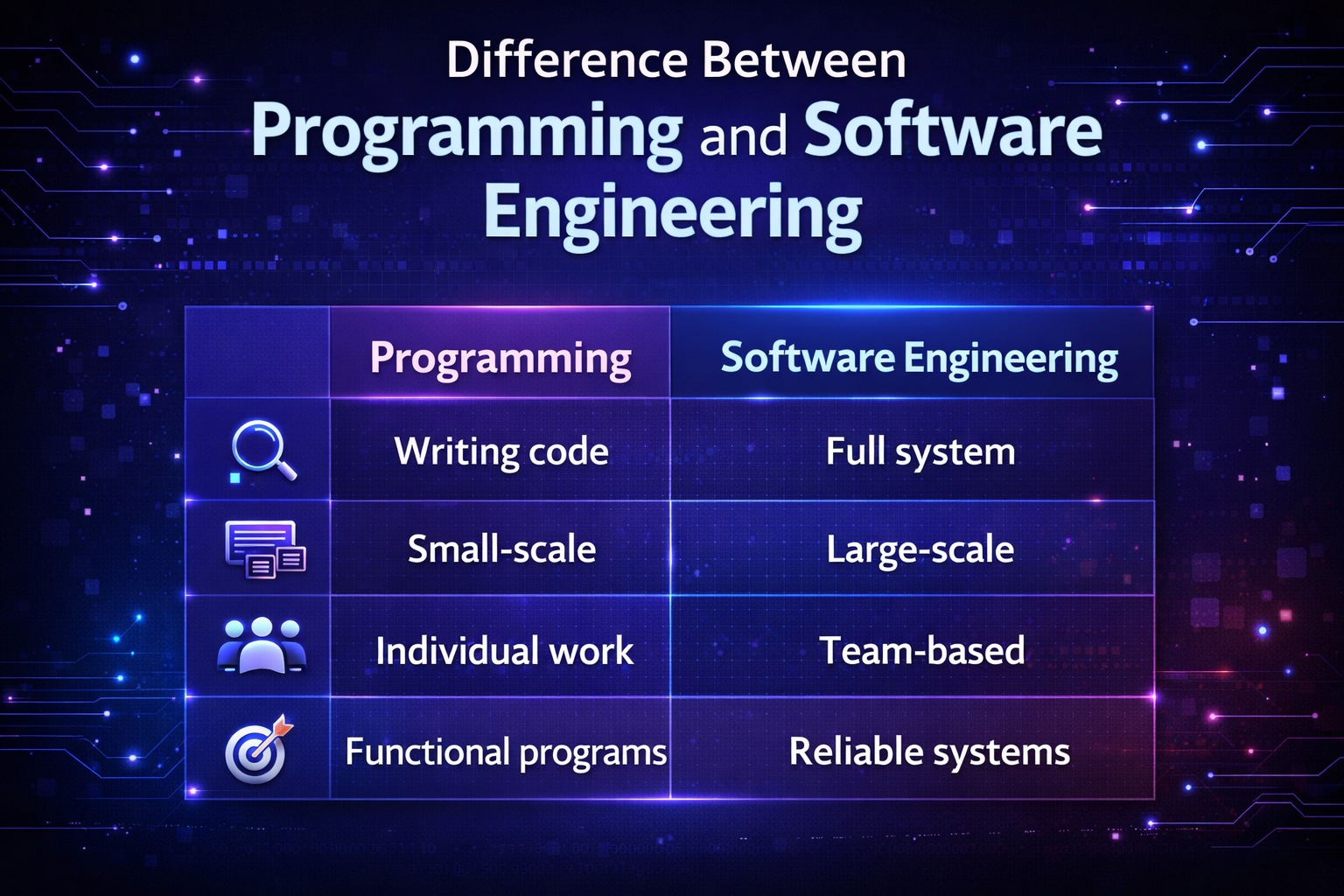
As an example, when a programmer asked to develop a program that can calculate the average of a series of numbers. Then what will happen? In this case, the programmer will be required to write a program that can be executed by the computer. If the programme can solve the problem, work is done.
But software engineering deals with the entire process of developing software applications. As an example when a programmer asked to develop a program that can cover all the requirements of a computer shop then the problem began. Developers should find out what are the requirements of a computer shop first. In this place we apply software engineering concepts. Then we developed our system along with these concepts. This Includes analyzing requirements, designing, developing, testing, and maintaining software applications.
Now you know the difference between these concepts. But In other words we can say, programming can be considered as part of software engineering.
>> READ THIS ARTICLE SINHALA
5.Key Principles of Software Engineering
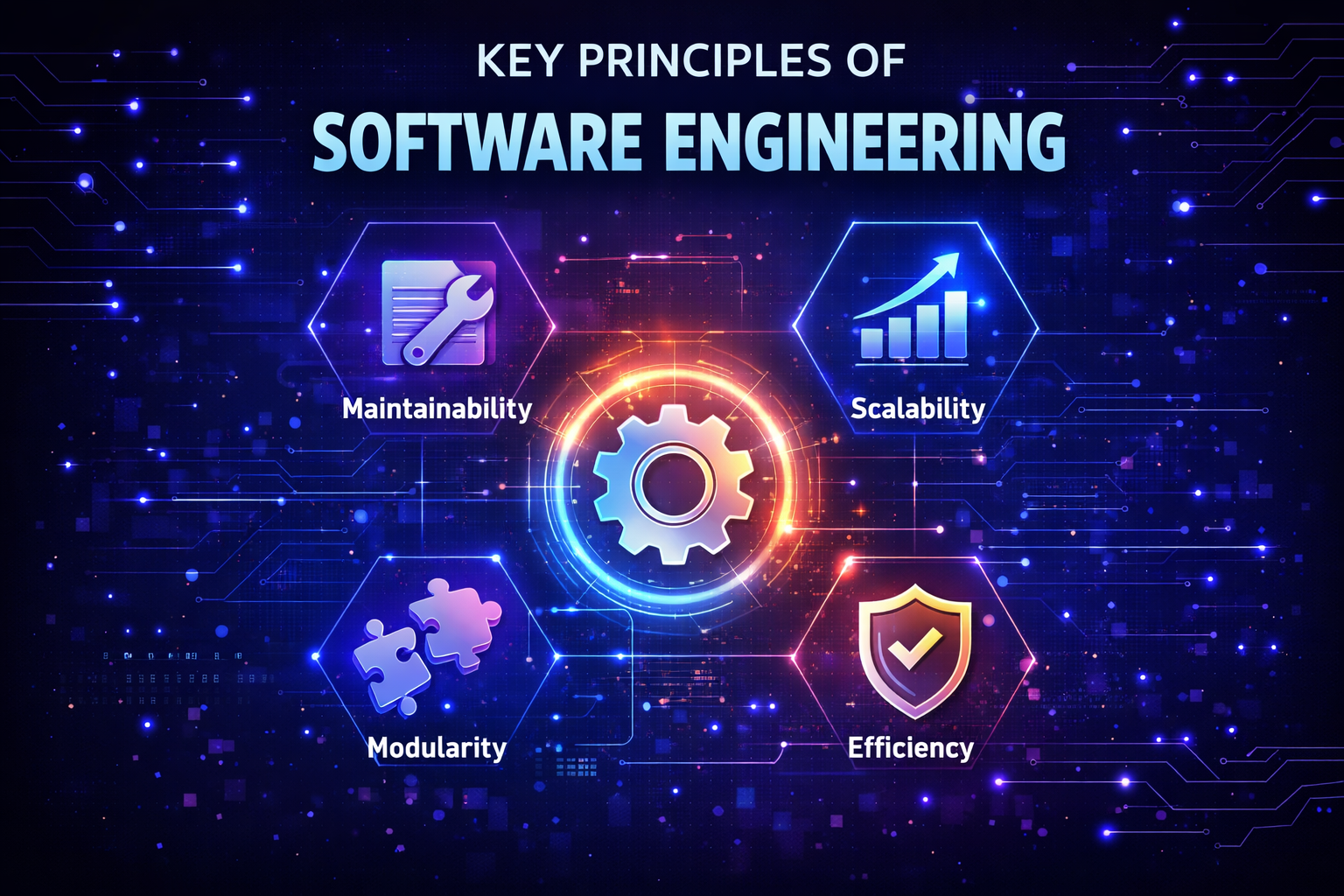
Software engineering has a number of key principles. These principles guide the software development process. Key principles are essentially used to ensure that the software system is well designed and can be maintained.
Some of the key principles you should know:
- Modularity – The software should be divided into small components.
- Reusability – The software components should be reusable.
- Maintainability – The software should be easy to update.
- Scalability – The software should be able to scale to meet the growing demands.
- Flexibility – The software can adapt to evolving requirements
These principles help the software developers to design software that can be maintained for a long time.
6.Software Development Life Cycle (SDLC)
Do you know about SDLC? The Software Development Life Cycle (SDLC) is a well organized seven phase framework. This framework guides the software development process. These steps are used by developing teams to efficiently build high-quality software, reduce costs, and minimize risks. It ensures deliverables meet user requirements and are completed within budget and timelines
The seven stages of the SDLC include:
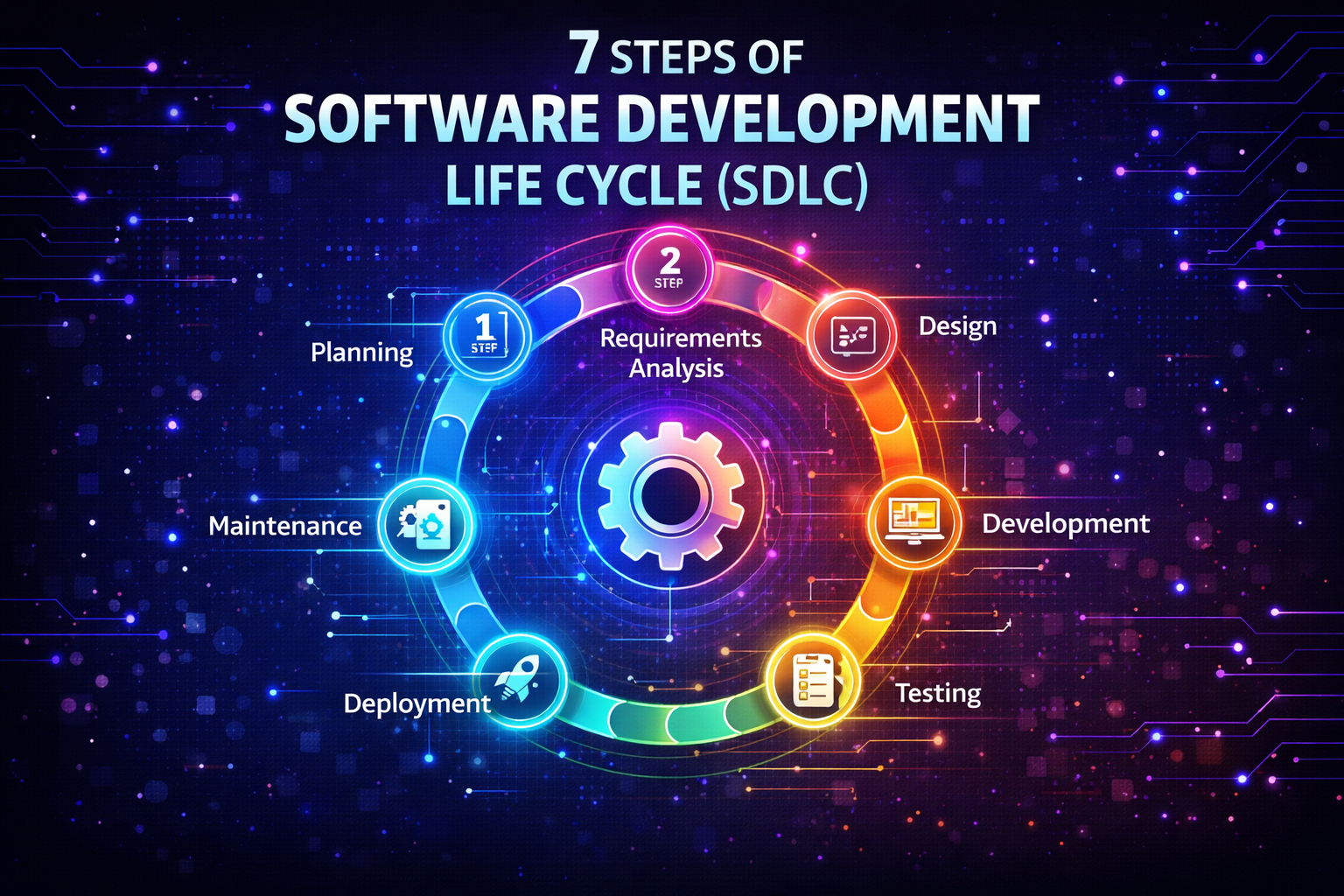
- Planning – The software project goals and requirements.
- Analysis – The requirements of the users.
- Design – The design of the software.
- Development – The actual coding of the software.
- Testing – Testing the software to ensure it works as expected.
- Deployment – The software is released to the users.
- Maintenance – The software is updated after its release.
The software development life cycle helps the software developer to design the software in a well-organized manner.
>> READ THIS ARTICLE SINHALA
7.Software Development Methodologies
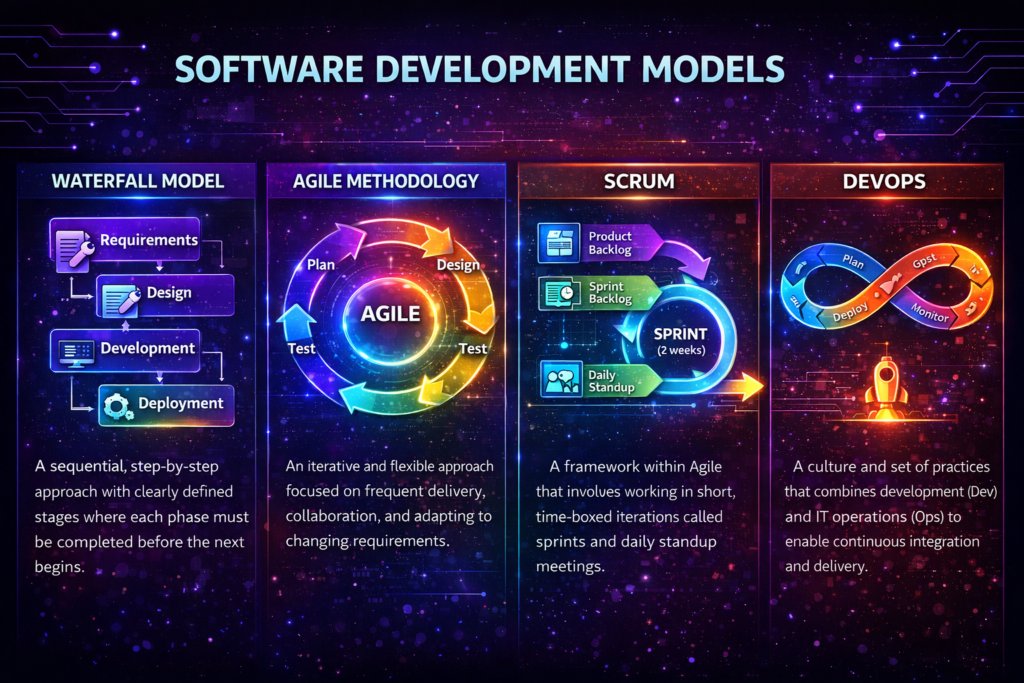
In the industry software engineers use different methodologies to manage the software development process. These methodologies help in planning and execution of the software project.
Some of the software methodologies include:
i.Waterfall Model
This is a traditional, linear-sequential SDLC model where each phase must be completed entirely before the next begins.
ii.Agile Methodology
This is a flexible approach that projects manage by breaking them into smaller parts. Agile focuses on flexibility, collaboration, and rapid delivery of working software.
iii.Scrum
This is a framework within the agile methodology for managing complex software development through iterative, time-boxed phases called Sprints (typically 1-4 weeks).
iv.DevOps
This is a new approach to software development. With the integration of development (Dev) and operation (Op) teams with the aim of reducing the software development lifecycle. It ensures quality, continuous delivery through the application of automation, collaboration, and shared responsibility.
These are only a few SDLC models that are famous. There are so many like V-Model, Spiral Model, Incremental Model, RAD Model, etc. Finally, methodologies enable software engineers to collaborate and produce high-quality software.
8.Roles in a Software Engineering Team
The software development process is not an individual’s work. A massive project needs more human effort. Therefore a Software Engineering Team involves many software engineers, and each of the team members has a unique role to play in the software development process
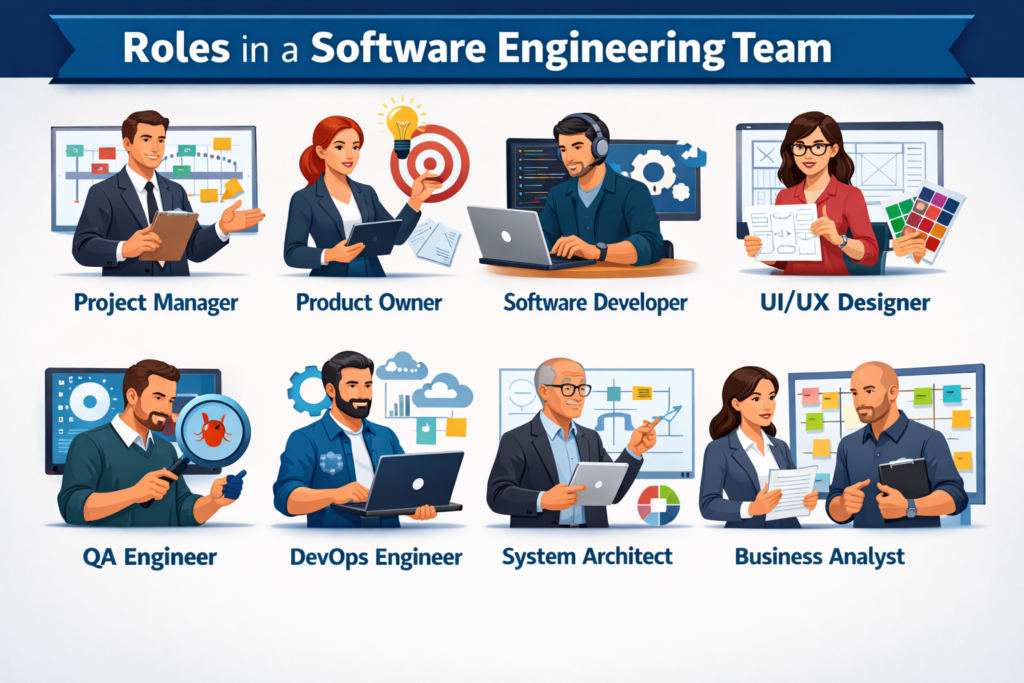
Some of the main roles played by the team members are:
- Software Developers – The software developers write the software.
- Software Testers (QA Engineers) – The software testers test the software.
- Software Architects – The software architects design the software.
- Project Managers – The project managers manage the project.
- DevOps Engineers – The DevOps engineers deploy the software.
There are a lot of resources needed to develop a large scale of software applications. So remember based on the project scale few other officers can be added to the team. However, the team of software engineers works together to ensure the successful completion of the project.
9.Programming Languages Used in Software Engineering
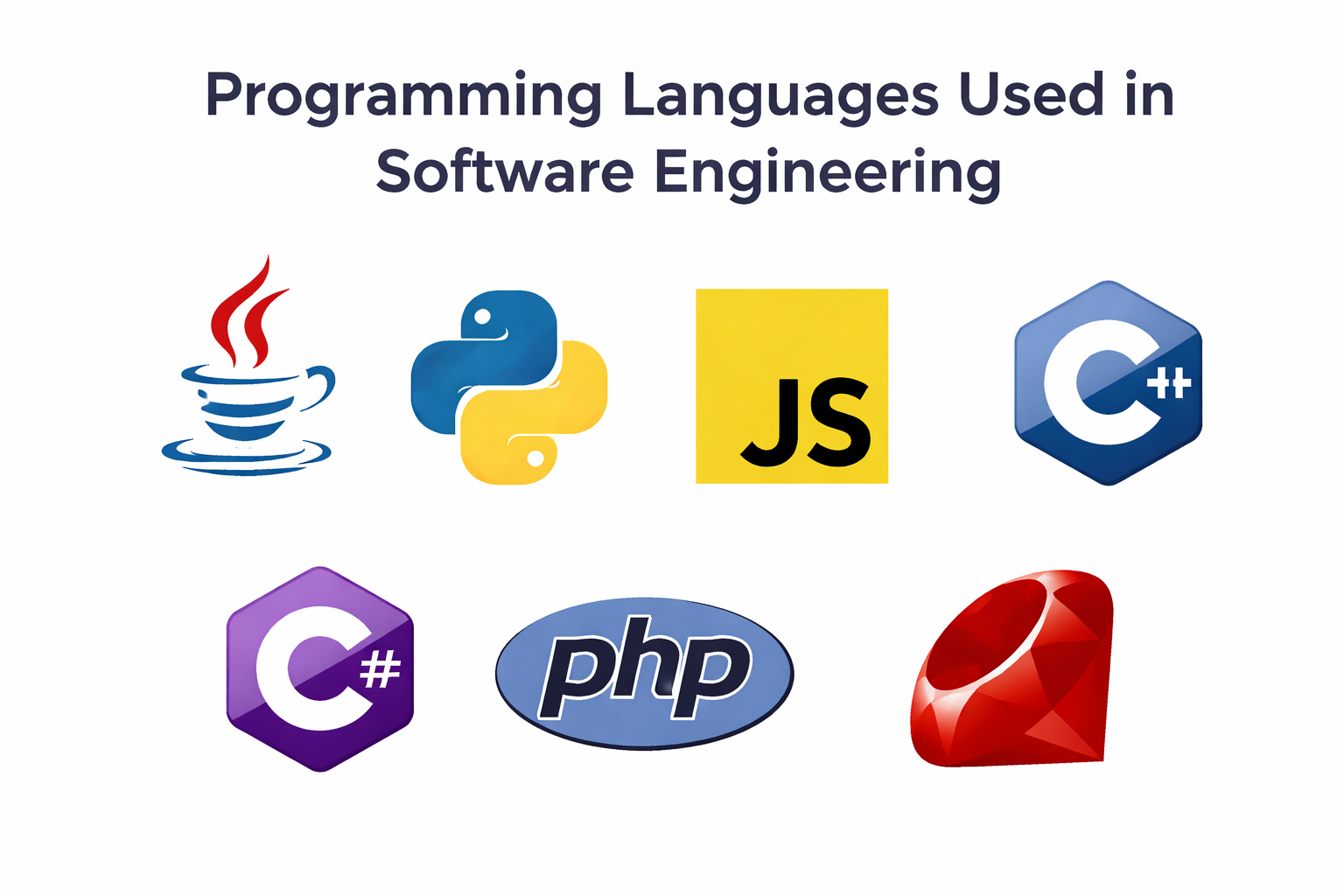
Software engineers use different programming languages to write the software depending on the software being developed. It is the free will of the developer team to select which programming language they are going to write for their application unless a special requirement does not occur.
Here are some famous programming languages in the industry:
- Java – This is popular in enterprise software.
- Python – This is popular in artificial intelligence, data science, and web development.
- JavaScript – This is used in web development.
- C++ – This is used in system software.
- C# – This is popular in developing Windows applications and games.
10.Tools and Technologies Used by Software Engineers
Software engineers use various tools to simplify their development process.
Here is some tools for you:
You can easily use these tools and these tools assist developers in their tasks by making them easier.
11.Types of Software Developed by Software Engineers
Software engineers can live the full life of their life. why I am saying this is Software engineers develop various types of software systems used in different industries. They have a lot of experience and knowledge about those industries. This is the best experience of their life and you got very successful applications.
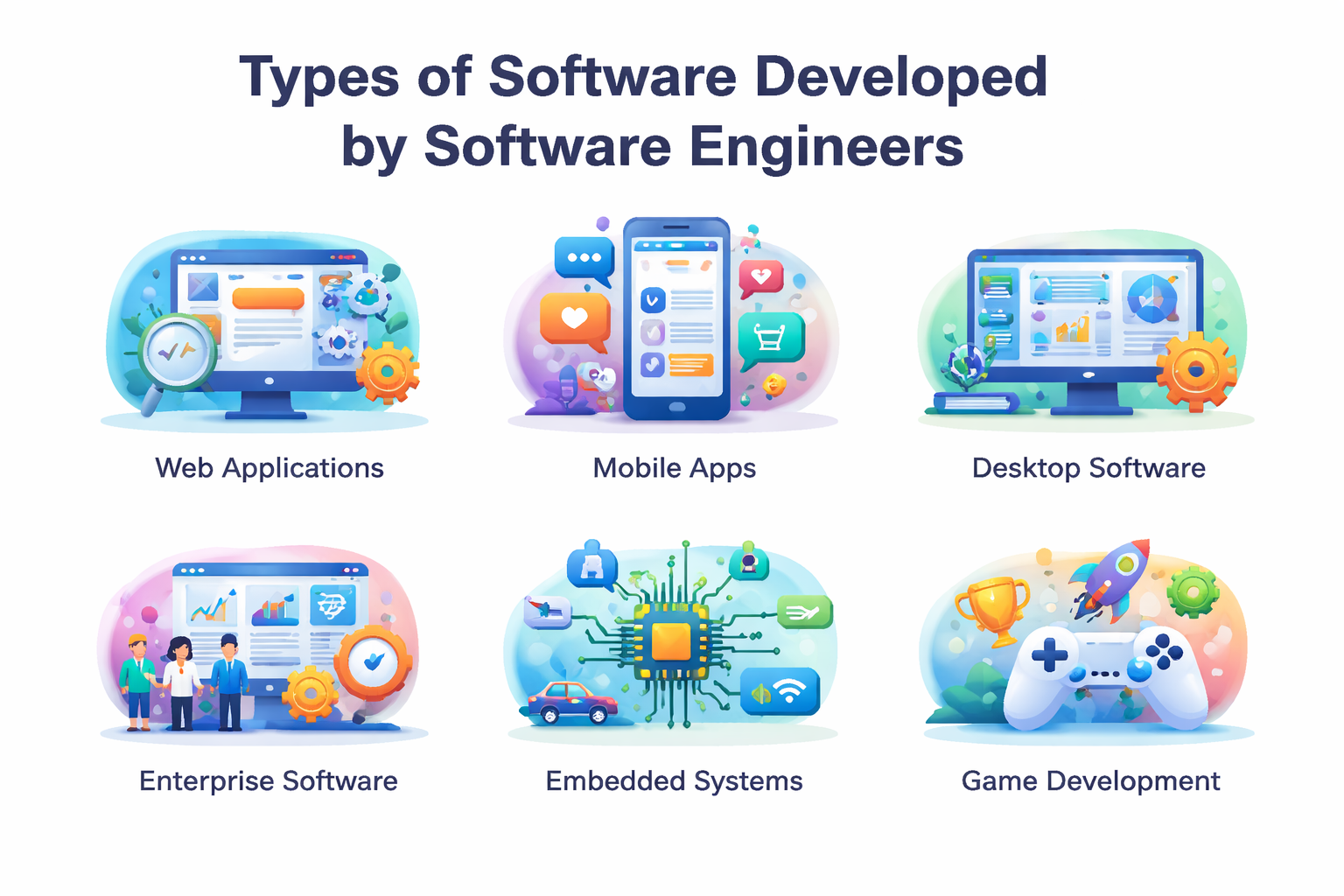
Here are some examples for what type of software applications they make
12.Skills Required to Become a Software Engineer
To become a successful software engineer, one needs to acquire various skills, including technical and soft skills. These skills help you to reach the peak of your career. These are some key skills required to become a software engineer.
Learning new technologies is essential for software engineers. Because new technologies and innovations arise every day and these technologies help to reduce their work pressure and enhance efficiency.
13.Challenges in Software Engineering
You can say Software engineering is another name for challenges and difficulties. Without various types of challenges there isn’t a word called software engineering. These are few key challenges one may encounter in software engineering.
Succeed in software engineering is not easy. But if you overcome the challenges your software is already built up. For this one needs to acquire technical skills and work in teams.
14.Career Opportunities in Software Engineering
Software engineering provides various career opportunities in different industries.
Some key career opportunities in software engineering are:
Software engineering is one of the most promising and lucrative careers. Especially in this modern world where everything is based on technology and innovations.
15.The Future of Software Engineering
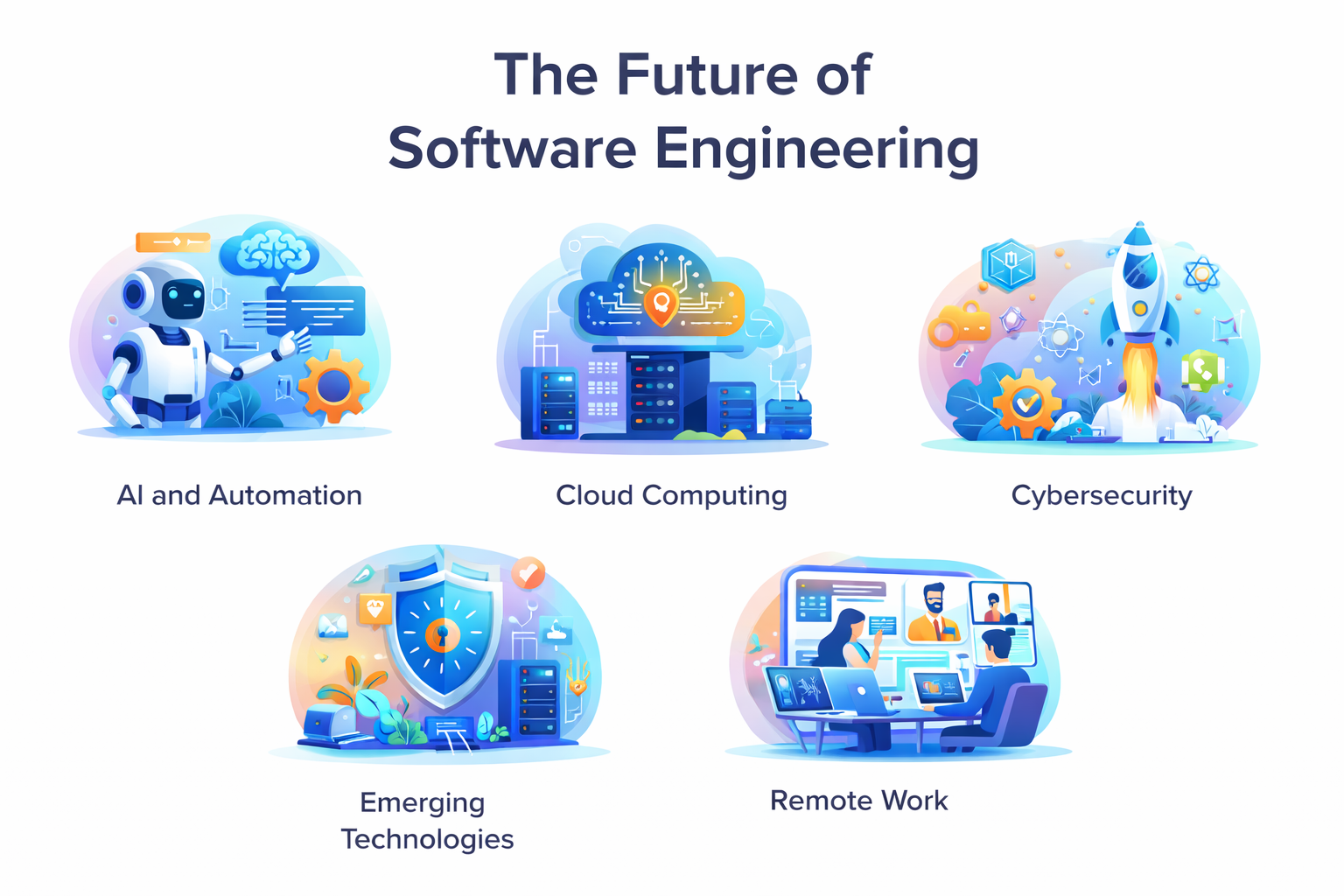
The future of software engineering will be shaped by new technologies like artificial intelligence, cloud computing, and automation. For example, modern technologies are helping software engineers build software faster and more efficiently. This includes coding assistants, automated testing, and low-code technologies. In the future, software engineers will be crucial for shaping the future of technology.
16.Tips for Successful Software Engineering Projects
17.Common Mistakes in Software engineering
i. Poor Requirement Analysis
Although many projects arise all over the world many projects fail because developers start coding without clearly understanding the project requirements. Remember when you develop the application if requirements are unclear or constantly changing, the final software may not meet user needs. So give much attention to users’ functional non-functional requirements.
ii. Lack of Proper Planning
Well planning is most resourceful for your project. Mainly if you have a well planned project the spending time can be reduced. Jumping into development without planning architecture, timelines, and resources can create confusion later. I think good software projects require design planning, milestones, and task breakdown.
iii. Writing Messy or Unmaintainable Code
Some developers only write the code work instead of making it clean and readable. If some emergency comes, the developer can’t find the code to fix it. This type of messy code writing caused many problems like hard to debug, hard for other developers to understand, difficult to update later, too difficult to handle exceptions.
iv. Poor Communication in the Team
Software development is a big task and usually it is a team effort. Lack of communication between developers, testers, designers, and managers can cause misunderstandings and delays. This can lead to project failure and your entire hard work to waste.
v. Ignoring User Experience (UX)
This is a huge mistake that the developer did not focus on. Remember you are designing your software for people who do not know coding and technical words. So your system wants to be user friendly. Even technically strong software can fail if it is difficult to use for the End User. Good software must be both functional and user-friendly.
Q1. What does a software engineer do?
For a software engineer’s general work includes designs, develops, tests, and maintains software applications. Engineers use compatible programming languages and engineering principles to build systems such as websites, mobile apps, computer programs, and business software that solve real-world problems.
Q2. Is software engineering a good career?
Yes. Software engineering is one of the most in-demand and high-paying careers worldwide. There are so many opportunities in this area like web development, mobile apps, AI, and cybersecurity. Some may think with developing AI this job’s demand will drop. Do not worry AI developers are also software Engineers. If you use AI smartly this is the best opportunity.
Q3. What are the common mistakes Software Engineer beginners make?
Q4. Is 30 too late to start coding?
No. Age 30 is absolutely NOT too late to start coding. In fact, I think it’s one of the best ages to begin. If you are 30 you can think logically. You may have a strong problem-solving ability. You have a clear gall and will not quit quickly. Sometimes your learning skill develops to learn faster and more efficiently. Your past experience can be of great help and more valuable when working with projects. But starting at 30 is not easy. You have to face many problems. Such as Less free time, slower at memorizing syntax, Feeling behind younger developers. But if you are smart, you can manage these problems and become a software engineer. How to start a software engineer career after 30.
>> READ THIS ARTICLE SINHALA
19.Conclusion
Software engineering is a vital field that helps build software applications that are efficient, efficient, and efficient. By using software engineering principles and software development methodologies, software engineers can build more complex software applications. From mobile applications and websites to artificial intelligence, software engineering touches almost all aspects of our lives. In the future, software engineering will continue to play a vital role as technology continues to advance. This makes software engineering a promising field for the future.